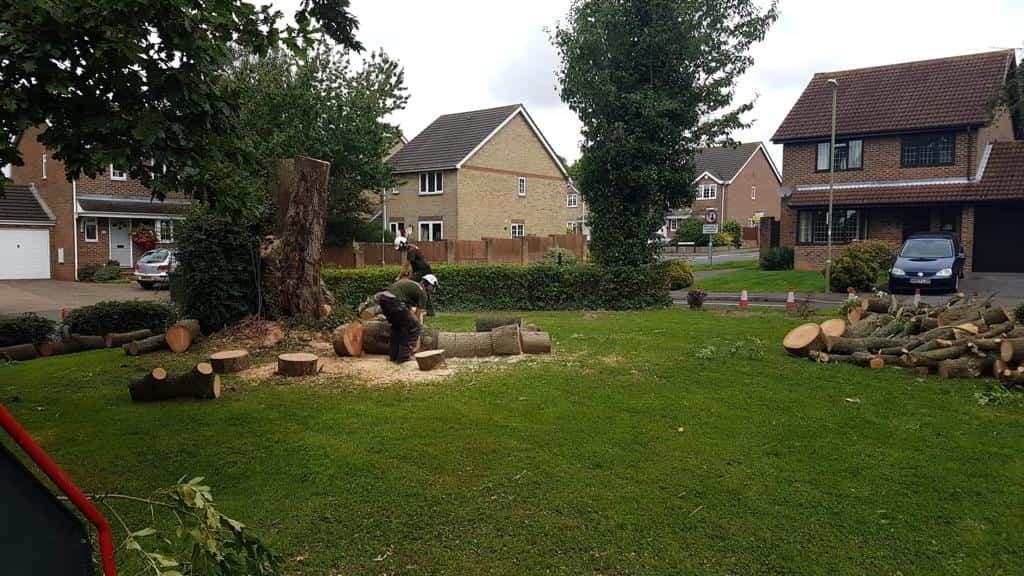
Trees can make a garden more attractive, provide valuable shade and contribute to a well-established outdoor environment. However, their condition and growth can change gradually, making it difficult to recognise when professional attention is required.
Tree surgery is not limited to removing unsafe trees. It also includes pruning, crown management, deadwood removal, hedge cutting and other carefully planned work intended to keep trees healthy, balanced and manageable. For property owners in Portishead, Bristol, recognising the early signs of a problem can help prevent further deterioration and protect the surrounding garden.
Signs That Professional Tree Surgery May Be Needed
A tree does not necessarily need to look severely damaged before it would benefit from professional assessment. Changes in its branches, shape, foliage or position can indicate that remedial work is appropriate.
Common signs include:
- Dead, cracked or hanging branches
- A canopy that has become excessively dense
- Branches obstructing paths, driveways or buildings
- Uneven or unbalanced growth
- Declining foliage during the growing season
- Cavities, decay or fungal growth around the trunk
- Branches crossing and rubbing against one another
- A noticeable lean or movement around the base
- Storm damage within the crown
Some of these issues are easy to see from ground level, while others may be concealed within a dense canopy. A professional assessment helps establish the extent of the problem and identify the most suitable response.
When Branches Become Unsafe or Damaged
Dead and weakened branches can remain in a tree long after they have stopped contributing to its growth. As their condition deteriorates, they may become more likely to break, particularly during strong winds.
Cracks, splits and hanging limbs require prompt attention because the visible damage may extend further into the branch than it appears. Removing unstable growth in a controlled manner can reduce the risk of sudden branch failure while preserving the healthy parts of the tree.
Professional tree surgeons can assess branch structure, identify suitable cutting points and remove damaged sections without causing unnecessary harm to the remaining canopy.
When a Tree Has Outgrown Its Available Space
Trees growing close to houses, paths, driveways and garden features can eventually become too large for their surroundings. Overhanging branches may restrict access, block light or repeatedly make contact with nearby structures.
Appropriate pruning or crown reduction can often make an established tree more manageable without removing it. The aim is to reduce selected parts of the canopy while retaining a balanced, natural shape.
Heavy or poorly placed cuts can encourage weak regrowth and leave large wounds. Professional work considers the tree’s species, age, condition and growth pattern before any branches are removed.
When the Canopy Is Too Dense or Unbalanced
A dense canopy may restrict light from reaching the garden and prevent air from moving freely through the branches. An uneven crown can also place additional strain on particular limbs, especially where previous damage or unsuitable pruning has affected the tree’s shape.
Selective crown thinning, reduction or reshaping may improve the canopy while preserving its overall structure. The correct method depends on the cause of the imbalance and the tree’s ability to respond to pruning.
Tree surgery should therefore be based on an assessment rather than a general decision to remove as much growth as possible.
When a Tree Appears Unhealthy
Changes in leaf coverage, bark condition or branch growth can indicate declining health. Warning signs may include sparse foliage, dying branch tips, peeling bark, cavities or fungal growth around the trunk and roots.
These symptoms do not always mean that the tree must be removed. Localised pruning may be sufficient if the main structure remains sound, while more extensive intervention may be necessary when deterioration is widespread.
A professional tree surgeon can distinguish between ordinary seasonal changes and signs that require closer attention.
Following Strong Winds or Severe Weather
Storm damage is not always immediately obvious. A branch may remain lodged within the canopy, or a structural crack may develop where a major limb joins the trunk. Trees that appear unchanged from ground level can therefore contain weakened sections.
An assessment is advisable if branches have fallen, the crown looks different, the tree has developed a lean or movement can be seen around the base. Early intervention may allow damaged growth to be removed before it affects a larger part of the tree.
Before Redesigning or Renovating a Garden
Tree surgery can also form an important part of garden planning. Overgrown branches, unmanaged hedges and old stumps can restrict usable space or interfere with proposed paths, patios and planting areas.
Assessing the trees before other garden work begins helps determine what should be pruned, retained, reshaped or removed. This allows the wider layout to be planned around healthy trees and reduces the likelihood of completed landscaping being disrupted later.
Why Professional Assessment Matters
Different tree problems can produce similar visible symptoms. Sparse foliage might result from branch damage, restricted growing conditions or natural seasonal change. A leaning tree may have adapted gradually, or it may be showing signs of instability.
Professional assessment considers the complete tree rather than focusing on a single symptom. This includes examining the crown, main branch unions, trunk and visible root area before recommending suitable work.
Accurate diagnosis helps avoid unnecessary cutting and ensures that the chosen service addresses the actual concern.
Conclusion
Professional tree surgery may be needed when a tree contains dead or damaged branches, has outgrown its available space, shows signs of decline or has been affected by severe weather. It can also improve garden light, access and usability when trees and hedges have become difficult to manage.
The appropriate solution depends on the tree’s condition and surroundings. EM Tree Surgery Portishead provides professional tree assessments and carefully planned tree surgery in Portishead, Bristol. If you are concerned about a tree or need help managing overgrown growth, contact the team to arrange an assessment.
Call us on: 01275 402 923
Click here to find out more about EM Tree Surgery Portishead
Click here to complete our contact form and see how we can help with your trees needs.